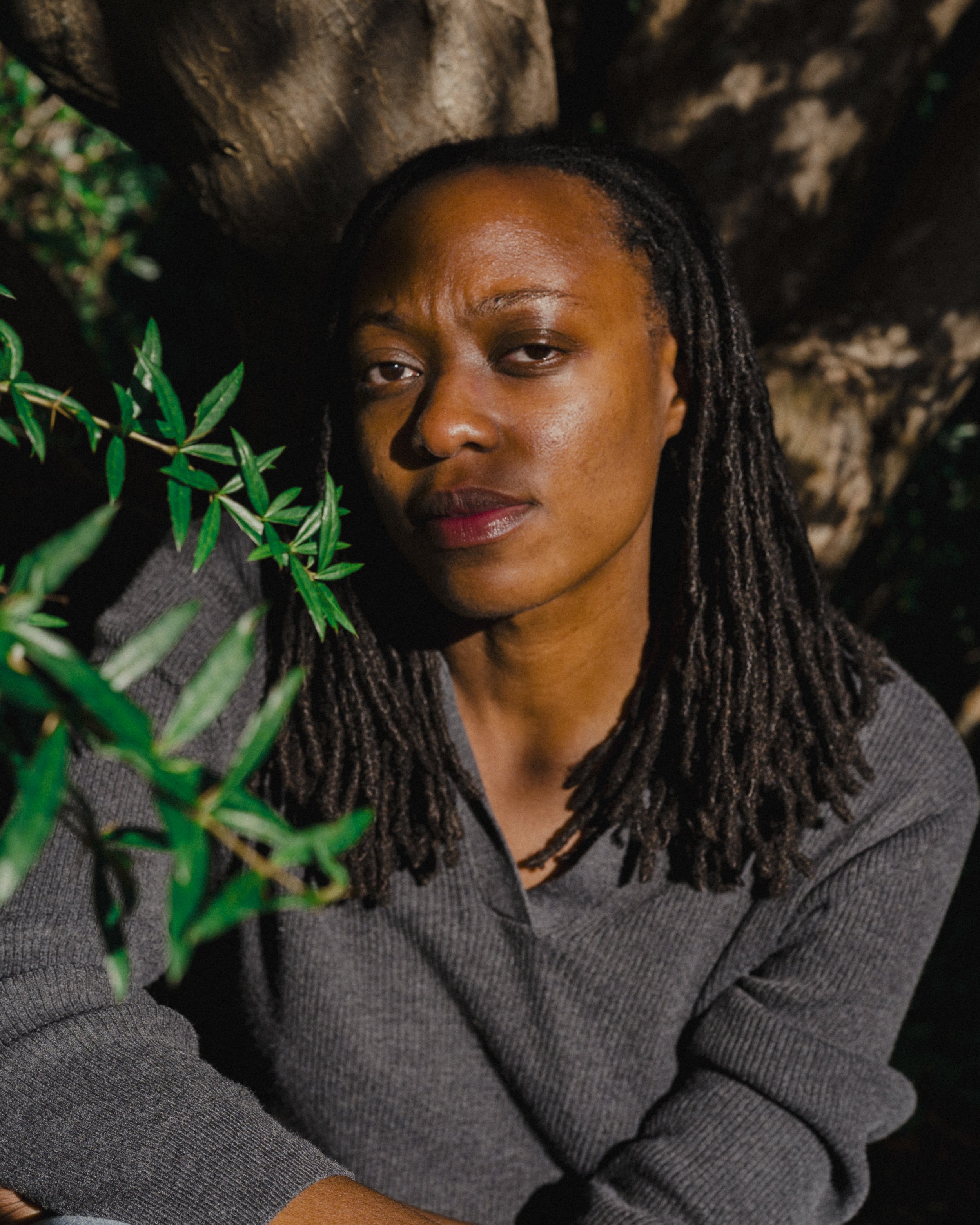
Adèle Oliver is a writer, producer, and James McCune Smith PhD scholar from Birmingham. Much of her writing focuses on Blackness, politics, history, music, ecology, and inequality across languages and cultures.
Adèle’s first book Deeping It: Colonialism, Culture and Criminalisation of UK Drill counters panic-fuelled discourse on UK drill, gang violence, and knife crime. Deeping It has been foundational to subsequent community workshops, theatre productions, talks, papers, and panels and hosted conversations at community organisations, schools, pupil referral units, universities and cultural institutions. Adèle’s doctoral research (University of Glasgow) focuses on the material and metaphorical significance of soil to Black sociality and Black electronic music. Grounded in global Black feminist geographies, Amílcar Cabral’s agronomic thought, and the agro-colonial history of the Cape Verde archipelago, this research attempts new ways of thinking about liberation, relation, sound, and space in times of increasing socio-cultural, political and ecological crisis.
Adèle works as an expert witness in criminal cases that use Black youth culture, music, and idiomatic language as evidence of bad character and/or gang affiliation and is on the steering committee for Art Not Evidence.
She holds an MA Hons in Portuguese and Linguistics (University of Edinburgh), an MA in Postcolonial Studies (SOAS, University of London), and maintains a keen interest in languages, literature, global history and politics. Alongside her own research, Adèle works on the LSE International Inequalities Institute’s ‘Racial Wealth Divide’ project and is an editor on a forthcoming book ‘Colonial Pasts and Inequality Today: Racial Wealth Divides in South Africa and the UK’. Outside of writing, she is a capoeirista and musician.
Adèle is working on her second music-driven narrative non-fiction book and is represented by Rachel Goldblatt at Curtis Brown.